I Just Bought Two DJI Cameras — And I Think I'm Back
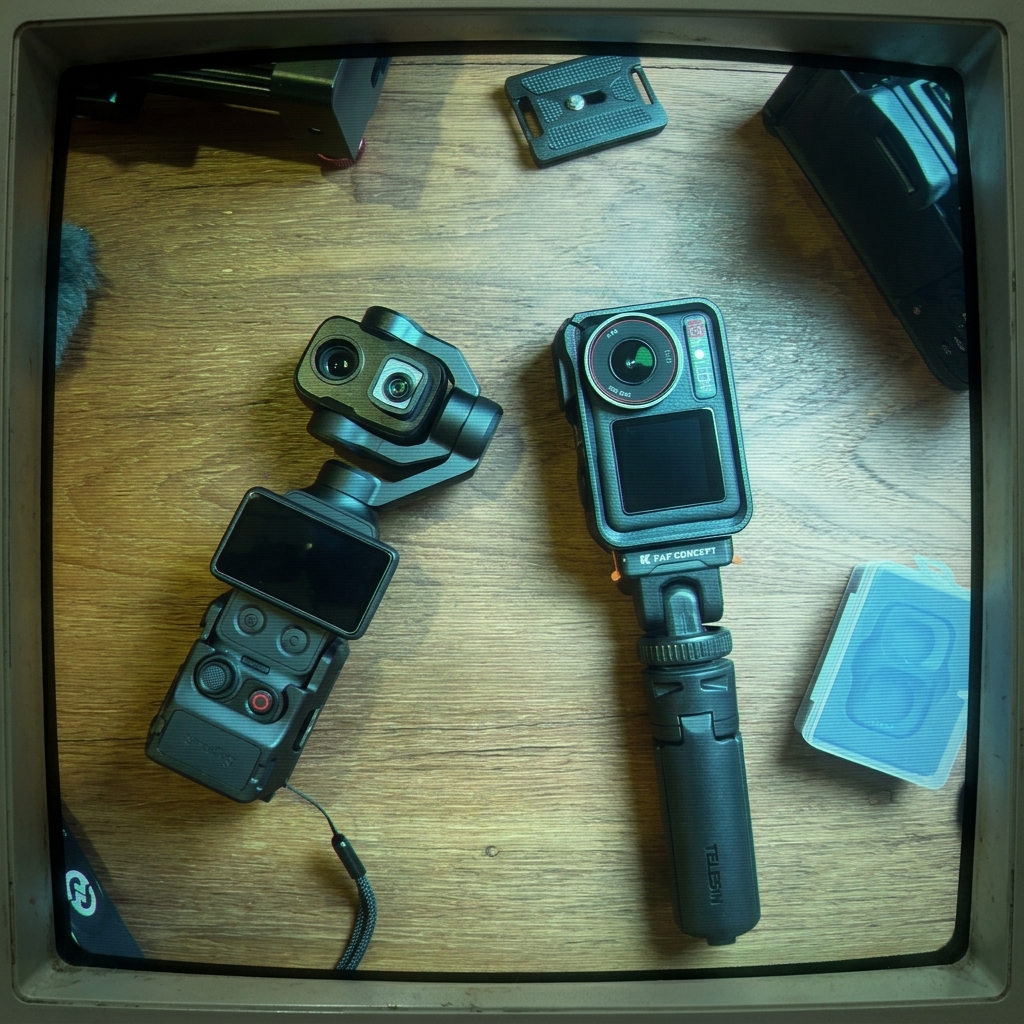
They arrived in two small boxes. Nothing dramatic. Just cardboard and foam and two devices that fit in my palm.
But when I picked them up for the first time, something shifted. A feeling I hadn’t had in a long time. Something between excitement and grief — because I suddenly remembered just how much I had missed this.
A Long Time Ago
I used to be obsessed with cameras.
Not casually interested. Genuinely obsessed. I read gear reviews the way other people read sports stats. I spent weekends chasing light. I had opinions about color profiles and rolling shutter and the difference between crop sensor and full frame that nobody in my life wanted to hear about.
Photography and videography were not hobbies for me — they were the way I made sense of the world. Point a lens at something and you have to actually look at it. Really look. That discipline changed how I saw everything.
And then life happened.
Work accelerated. Family responsibilities compounded. Health became a thing I had to manage instead of ignore. Somewhere in the middle of all that, the cameras went into a bag, the bag went into a closet, and a decade quietly passed.
Ten years. Just like that.
The DJI Osmo Pocket 4 Pro
The first thing that struck me when I held the Pocket 4 Pro was how settled it felt in my hand. Previous Pocket cameras always had a slightly toy-like quality to them — impressive for their size, but you were always aware of the compromise.
This one is different. The image quality coming out of this thing is genuinely cinematic. The 1-inch sensor captures light in a way that feels more like a proper camera than anything this small has any right to be. And the three-axis stabilization — I still cannot quite believe it. You can walk, you can run, you can move through a crowd and the footage looks like it was shot on a slider by someone who knew exactly what they were doing.
For the kind of content I want to make — daily moments, travel, the texture of ordinary life — this is almost unfairly good.
What I appreciate most is the framing it creates: small camera, low barrier, no setup ritual. You just pull it out and start shooting. That is exactly what I need.
The DJI Action 5 Pro
The Action 5 Pro is a different beast entirely.
Where the Pocket is elegant and intentional, the Action is indestructible and fearless. Waterproof to ten meters. Built to take abuse. A sensor that performs absurdly well in low light for an action camera — this thing shoots in darkness that would have required dedicated lighting equipment not long ago.
I picked this one up for the situations where I cannot afford to be precious about the gear. Runs. Hikes. Anything where the camera might get wet, dropped, or shoved into a bag and forgotten. The Action 5 Pro handles all of it without complaint and still delivers footage that looks sharp, controlled, and color-accurate.
Together, these two cameras cover nearly every scenario I can think of. The Pocket for when I want something beautiful. The Action for when I want something captured, no matter what.
What Ten Years Does to Technology
Here is the thing that genuinely stopped me in my tracks.
I remember the Sony full frame cameras I was shooting with a decade ago. They were serious pieces of equipment. Big, expensive, impressive. And the footage they produced was genuinely good — for the time.
What these two DJI cameras produce now, in 2026, from sensors that fit in my fist, at a fraction of the price, with stabilization that requires zero post-processing — it is just not a fair comparison.
Technology did not stand still while I was away. It ran.
The low-light performance alone would have seemed impossible to me ten years ago. The stabilization algorithms are doing things that used to require a $3,000 gimbal rig and someone who knew how to operate it. The color science is sophisticated. The dynamic range is real.
I kept watching test footage thinking: this cannot actually be from that tiny thing. But it is.
The Friction Problem
The real reason I stopped making videos was not just time and health. It was friction.
Every time I thought about picking up the camera again, there was a weight to it. Find the battery. Charge the battery. Mount the lens. Check the settings. Review the footage. Edit the footage. The gap between “I want to capture this” and “I am actually capturing this” was wide enough that the moment usually passed before I got there.
These cameras collapse that gap almost entirely.
The Pocket is always charged, always in my pocket, always one motion away from recording. The Action clips onto whatever I am doing. There is no setup. There is no ritual. There is just the thing happening in front of me and a button I can press.
For someone trying to rebuild a creative habit after a long absence, that reduction in friction might be everything. The best camera is not the one with the biggest sensor — it is the one you actually use.
What Comes Next
I am not making promises to myself. I know better than that.
But I do know that something woke up when those boxes arrived. A part of my brain that had been very quiet for a long time started paying attention again — to light, to composition, to the way a moment can be held if you are paying attention at the right time.
Whether that turns into a YouTube channel or a photo journal or just footage that sits on a hard drive and makes me happy, I genuinely do not know yet.
What I do know is that I have two incredible tools in my hands now. And for the first time in ten years, I am looking forward to seeing what I do with them.
If you have been away from something you loved — it might still be waiting for you. Sometimes it just takes two small boxes to remind you.
> GUESTBOOK LOG
> Fetching terminal logs...